Latest guides
Up-to-date buying guides and comparisons, with clear criteria and direct product links.

Goalkeeper
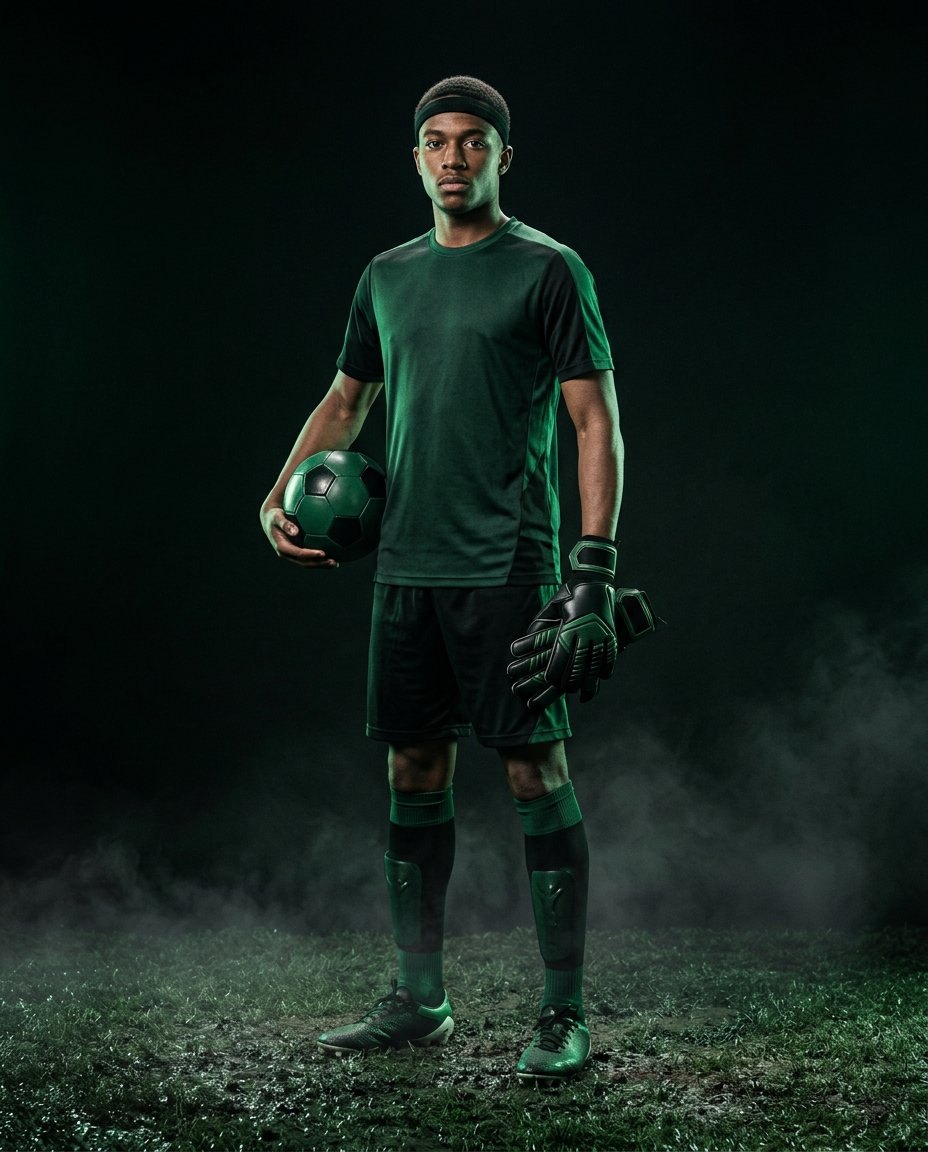
The child who goes in goal needs more kit than anyone else on the team and usually gets less: a pair of gloves from the lost-property box and the same shorts as the outfield players. Goalkeeping on turf and hard ground without padding hurts, and a keeper who hurts stops diving. This checklist covers what a young keeper needs at each stage, what can wait, what the club usually provides and the sizes to check before buying. The checklist Item Under 9 9 to 12 13 and over Gloves Soft junior pair, correct size Removable finger spines, plus a turf training pair Match pair plus training pair Padded shorts or compression Padded compression shorts Padded shorts; padded pants for turf and winter Padded pants for turf, shorts for grass Jersey Club shirt in a different colour Long-sleeve padded elbows for turf Padded long-sleeve for turf, short-sleeve for summer Boots Same as outfield, multi-ground Multi-ground with good heel hold Firm-ground or multi-ground, stable not light Cap Optional...

Guides
Most soccer gifts are decorations: lamps, mugs, posters, keychains. A young player opens them, says thank you and never thinks about them again. The gifts that get used are kit the player needs but nobody buys for themselves, and equipment that creates more touches at home. This guide lists them by age and by budget, with the sizes you need to know before you order, and the categories to avoid. What you need to know before ordering Three facts make any gift usable: the player's shoe size (for socks, shoes, insoles), their ball size (3 under 8, 4 from 8 to 12, 5 from 12) and, for goalkeepers, their glove size. Ask the parent; if it must be a surprise, choose from the items below that do not depend on size. Under $25 Grip socks in the player's shoe size (the most-wanted small gift in youth football right now). A training ball in the correct size. Ball pump with gauge; nobody buys their own. A set of 25 disc cones. A padded headband or a pack of tie headbands. Goalkeep...

Guides
Pop-up goals are the most used piece of home and park equipment because they take ten seconds to set up and fit in a car. They are also the piece most often returned, because they are bought too small, the twist-fold defeats the parent, or the frame snaps the first time a teenager hits it. This guide covers sizes, folding, durability and which type to buy for a small child, for real training and for a backyard. Sizes and what each one is for Width Best for 2.5 to 3 ft (75 to 90 cm) Toddlers, passing gates, indoor play 4 ft (120 cm) Under-10s, small-sided games, finishing drills; the size most families should buy 6 ft (180 cm) Teenagers, shooting practice, larger yards 8 to 12 ft (240 to 365 cm) Coaches, full-size-feel practice; heavy and awkward to fold Pairs are better than singles: two goals turn a session into a game. How they fold (and why people hate it) Pop-up goals use a spring-steel hoop that twists into a figure of eight and then folds flat. The trick is to hold op...

Boots
Most soccer boots are built on a narrow last because narrow boots feel fast. Players with wide feet are told to size up, which makes the boot too long and does nothing for the width. There are better answers: lasts cut wider, uppers that stretch, and a fitting method that finds the right boot in a shop or on a returns-friendly order. This guide covers all three, for adults and for children. Are your feet actually wide? Stand on paper, trace both feet, measure the widest point. Compare to the length. In adult sizes, a width over 4 in (10.2 cm) at a US men's 9 is wide; over 4.3 in (11 cm) is extra wide. In youth, if the big toe and little toe both press against the upper of a boot that is the correct length, the foot is wide for that last. Many "wide" problems are a high instep instead: the foot does not spread but the top of the boot presses. Those players need a soft upper and a looser lacing pattern, not a wider last. Materials: what stretches and what does not Ka...

Boots
Boots smell because they never dry. Sweat soaks the lining, the boot goes into a bag in the dark, and bacteria do the rest. Mud is a separate problem, and the washing machine is the worst answer to both: it loosens the glue that holds the sole plate and warps the upper. Here is the routine that keeps boots clean and dry in ten minutes, the fix for boots that already stink, and what to do with leather versus synthetic. After every session (five minutes) Knock the soles together outside to drop the mud and turf infill. Brush dry mud off the upper and from between the studs with a stiff brush or an old toothbrush. Wipe the upper with a damp cloth. For leather, a little leather cleaner or saddle soap once a week. Pull out the insoles and the laces loose. Stuff the boots with newspaper and leave them in a ventilated spot, not near heat. Swap the newspaper after an hour if the boots were soaked. The deep clean for boots that already smell Remove the insoles. Wash them by hand in...

Goalkeeper
Latex dies from three things: dirt ground into the palm, drying out near heat, and fermenting in a closed bag. All three are avoidable with ten minutes after each session and no special products, although a glove wash helps. Here is the routine that keeps grip alive, what to do about the smell inside, what never to do and when to accept that the gloves are done. The after-session routine (five minutes) Knock the gloves together to drop loose dirt and turf infill. Rinse under lukewarm water, 86 F (30 C) at most, palms down. Work a small amount of glove wash or a drop of mild soap into the palm with your fingertips. Do not scrub with a brush. Rinse until the water runs clear. Squeeze the glove gently; never wring or twist. Dry on a rack at room temperature, fingers open, palms facing up. Not on a radiator, not in the sun, not in the dryer. Cleaning the inside (the smell) Turn the glove halfway inside out if the construction allows, rinse the lining and leave to dry open. For ...

Goalkeeper
A child who volunteers to go in goal deserves gloves that let them catch. Most junior gloves sold in bulk packs have thin latex, a loose flat cut and no protection, and they teach a six-year-old that the ball hurts. This guide tells you what to buy at each age, when finger protection helps and when it gets in the way, what to expect to pay and how to make a pair last past Christmas. Sizing in one line Measure the hand from the base of the palm to the tip of the middle finger and use our size chart ; as a shortcut, size 4 at 5 to 6, size 5 at 7 to 8, size 6 at 9 to 10 and size 7 at 11 to 12, with half an inch of latex beyond the fingertip at most. By age: what changes 5 to 7. Soft latex, roll-finger or flat cut, elastic wrist strap the child can fasten alone. Finger protection is optional; many children find the spines stiff and stop wearing the gloves. Comfort wins. 8 to 10. This is when a shot starts to sting. Removable finger spines help confidence; buy gloves with spines t...

Guides
Shorts look like the simplest buy in the bag, and they are the item most often returned: too long on a small child, too tight across the thigh for a teenager, no pockets for the parent who wants them, pockets for the coach who bans them. Add the separate world of padded goalkeeper shorts and it is worth five minutes. Here is how shorts are sized, the lengths and liners that work for each player, and what goalkeepers actually need. Sizing: waist first, then length Soccer shorts are sized by waist with an elastic drawstring, so the waist size is forgiving. Length is not. Youth shorts should finish above the knee, roughly mid-thigh for under-8s and a hand's width above the knee from age ten; anything longer catches the knee when sprinting and looks borrowed. Adult inseams run from 5 in (13 cm) for a modern short cut to 9 in (23 cm) for a traditional one. Women's cuts have a shorter rise and a narrower waist; many women prefer youth large or men's small for a longer leg. Y...